
Storm Damage Roof Replacement in San Bruno, CA
After a major storm, the difference between a denied claim and a fully approved roof replacement usually comes down to documentation. Our storm damage process in San Bruno combines emergency protection, thorough photo and measurement documentation, and direct coordination with your insurance adjuster — so the damage gets recorded properly and the replacement gets approved.
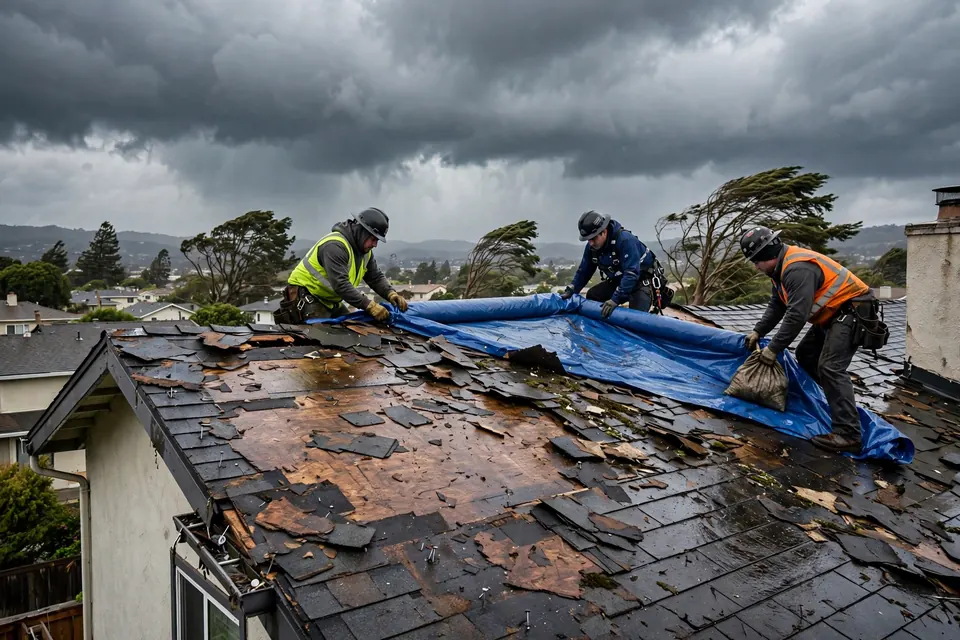
What This Service Includes
We start with a complete storm damage assessment: every slope photographed, hail hits marked and counted per square, wind-lifted shingles documented, and collateral damage (gutters, siding, screens) recorded. That documentation becomes the backbone of your insurance claim, and we meet the adjuster on-site to walk the roof together.
Need roof replacement in San Bruno? Call (888) 974-0663 today.
Call NowEmergency Quick CallSigns You Need This Service
- Missing, creased, or lifted shingles after high wind
- Hail bruising or granule loss in distinct impact patterns
- Dented vents, gutters, or flashing
- Interior leaks appearing after a storm
- Neighbors getting new roofs (a strong signal your area was hit)
How We Do It Right
If the adjuster approves full replacement, we install a complete new roofing system — often with an upgrade to impact-resistant shingles that can lower your premiums. We handle the supplement process if hidden damage appears during tear-off, and we never ask you to sign over your entire claim or pay anything beyond your deductible for the covered work.
Storm Damage Roof Replacement for San Bruno Homes
When persistent marine-layer fog, salt air, and gusty Peninsula winds hit San Bruno, we are the crew homeowners call: rapid assessment, carrier-grade documentation, and replacement built to resist the next storm better than the last roof did.
Related Roofing Services
Emergency Roof Replacement
Emergency dry-in and fast-tracked full replacement for San Bruno homes with active leaks or storm damage. Call line answered 24/7.
Partial Roof Replacement
Targeted replacement of damaged roof sections for San Bruno homes — matched materials, proper tie-ins, full warranty on our work.
Skylight Replacement During Reroof
Replace aging skylights during your San Bruno reroof — new units flashed directly into the new roofing system.
Roof Ventilation Upgrade
Balanced intake and exhaust ventilation designed into every San Bruno replacement — protects shingles and warranties.
Areas We Serve
Belle Air
Roof replacement in Belle Air, San Bruno.
Downtown San Bruno
Roof replacement in Downtown San Bruno, San Bruno.
Crestmoor
Roof replacement in Crestmoor, San Bruno.
Rollingwood
Roof replacement in Rollingwood, San Bruno.
Helpful Guides
Roof Insurance Claims in San Bruno: How Replacement Coverage Really Works
Guide from Roof Replacement Co.
7 Signs Your San Bruno Home Needs a Roof Replacement
Guide from Roof Replacement Co.
Frequently Asked Questions
Should I call a roofer or my insurance company first?
Call us first for a free inspection. If there is real storm damage, we document it and then you file the claim with evidence in hand. Filing a claim with no damage on record can count against you.
Will my insurance cover a full replacement or just repairs?
That depends on the extent and pattern of damage and your policy. Our documentation is built to show the adjuster exactly what the storm did, which maximizes the chance of full replacement approval when it is warranted.
My roof survived the storm but lost some shingles. Is that storm damage?
Wind-creped or torn shingles are storm damage, and creased shingles — bent but still attached — are the sneaky kind: the crease breaks the sealant and the shingle will fail at the next wind event. We document creasing with photos because carriers recognize it as damage. A few lifted shingles can be a repair; widespread creasing across slopes usually means replacement.
How fast can you tarp my roof if it's leaking tonight?
Our call line is answered 24/7 and emergency dry-in is same-day in San Bruno. Temporary tarping stops interior damage while the permanent replacement is scheduled — usually within days, not weeks. Call (888) 974-0663 any time; waiting through another storm cell is what turns a tarp job into a drywall and insulation job.
How Storm Damage Roof Replacement Works
San Bruno's storms arrive as winter atmospheric rivers and sharp spring wind events — less hail than the Midwest, but wind-driven rain that finds every weak flashing and ridge cap. Our process starts with a damage inspection: lifted and creased shingles, wind-torn ridge caps, impact marks, and interior water tracing in the attic. Everything is photo-documented with timestamps, because that record is what insurance carriers and our own scope are built on.
If the roof is open to weather, emergency dry-in comes first — tarps and peel-and-stick membrane secured the same day, not after the paperwork. Then the full replacement proceeds like any tear-off, with one difference: we upgrade the details the storm exposed. That means six-nail fastening in wind zones, hand-sealed starter courses, and ice-and-water membrane in valleys that the old roof never had. A storm replacement should leave the roof stronger than the one the storm beat.
Storm-Hardened Materials and Equipment
After storm damage, we specify high-wind-rated architectural shingles (110–130 mph ratings) as the baseline, not the upgrade. Ridge caps get the high-profile, wind-rated treatment, and every valley gets self-adhering membrane under the shingle or metal — valleys are where wind-driven rain concentrates, and felt-only valleys are a recurring failure we see after every big storm season.
Emergency equipment rides on the truck year-round from November through March: reinforced tarps, battens and cap nails for securing them without tearing more shingles, and peel-and-stick membrane for dry-in that has to hold through the next storm cell. After the replacement, magnetic sweepers work the yard twice — storm tear-offs scatter more nails than planned ones, and we treat the cleanup accordingly.