
Flat Roof Replacement (TPO & EPDM) in San Bruno, CA
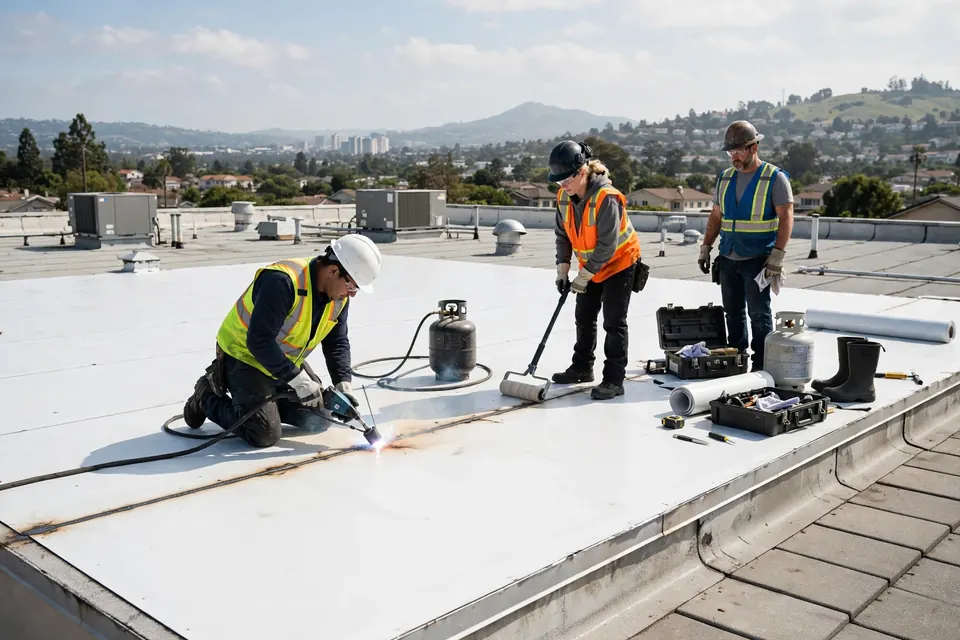
Flat and low-slope roofs fail differently than pitched roofs: they live or die by drainage and seams. Our flat roof replacements in San Bruno start with correcting the fundamentals — slope, drainage, and penetrations — then install a modern single-ply membrane (TPO or EPDM) as a fully adhered or mechanically attached system with heat-welded or taped seams.
What This Service Includes
We tear off the failed membrane down to the deck or insulation, address any ponding areas with tapered insulation, replace damaged substrate, and install the new membrane with new flashing at every curb, vent, and parapet. The result is a monolithic waterproof surface with far fewer failure points than the built-up or modified-bitumen roofs it replaces.
Need roof replacement in San Bruno? Call (888) 974-0663 today.
Call NowEmergency Quick CallSigns You Need This Service
- Ponding water that stands more than 48 hours after rain
- Blisters, bubbles, or separations in the membrane
- Seam failures or open laps
- Leaks around vents, skylights, or parapets
- An aging built-up (tar and gravel) roof past 20 years
How We Do It Right
We install 60-mil TPO (white, reflective, heat-welded seams) or 60-mil EPDM (black, extremely durable, ideal for certain exposures) depending on the building and budget. Every replacement includes tapered insulation design where drainage needs help, new metal edge details, and a thorough reseal of every penetration. Expect 20 to 30 years from a properly installed single-ply system.
Flat Roof Replacement (TPO & EPDM) for San Bruno Homes
San Bruno's persistent marine-layer fog, salt air, and gusty Peninsula winds are brutal on flat roofs: ponding, UV breakdown, and seam stress. Our replacements correct drainage first, then install membranes engineered for this exposure.
Related Roofing Services
Partial Roof Replacement
Targeted replacement of damaged roof sections for San Bruno homes — matched materials, proper tie-ins, full warranty on our work.
Skylight Replacement During Reroof
Replace aging skylights during your San Bruno reroof — new units flashed directly into the new roofing system.
Roof Ventilation Upgrade
Balanced intake and exhaust ventilation designed into every San Bruno replacement — protects shingles and warranties.
Commercial Roof Replacement
Phased TPO, EPDM, and metal replacement for San Bruno businesses — watertight throughout, minimal disruption.
Areas We Serve
Belle Air
Roof replacement in Belle Air, San Bruno.
Downtown San Bruno
Roof replacement in Downtown San Bruno, San Bruno.
Crestmoor
Roof replacement in Crestmoor, San Bruno.
Rollingwood
Roof replacement in Rollingwood, San Bruno.
Helpful Guides
How Much Does Roof Replacement Cost in San Bruno?
Guide from Roof Replacement Co.
Roof Warranties Explained: What San Bruno Homeowners Actually Get
Guide from Roof Replacement Co.
Frequently Asked Questions
TPO or EPDM — which is better for my building?
TPO's white reflective surface cuts cooling costs and its heat-welded seams are exceptionally strong. EPDM has a longer track record and handles building movement well. We recommend based on your roof's specifics, not on what we happen to stock.
Can you fix ponding water during replacement?
Yes — this is one of the best reasons to do a full replacement. We design tapered insulation layouts that create positive drainage to scuppers or drains, eliminating the ponding that killed the old roof.
How long does a TPO or EPDM roof last in San Bruno?
Twenty to thirty years with basic maintenance. The fog belt is actually kind to membranes — UV is the enemy, and our marine layer blocks a lot of it. What shortens life is ponding water and neglected debris at drains. Keep drains clear and get the seams checked every couple of years, and 25 years is a reasonable expectation.
Can you fix ponding water without replacing the whole roof?
Sometimes, with tapered insulation saddles added over the existing membrane — but only if the membrane itself is healthy. If the roof is at end of life, the honest fix is replacement with corrected slope built in. We measure ponding depth and duration during inspection and show you photos before recommending either path.
How Flat Roof Replacement (TPO & EPDM) Works
Flat roofs fail at drainage and seams, so the replacement starts there. We tear off to the deck, check the slope with a level — San Bruno's older commercial buildings and home additions often have dead-flat spots where fog drip ponds for days — and correct it with tapered insulation crickets that push water to drains and scuppers. No membrane survives permanent ponding, so slope correction is not optional.
Over the tapered insulation goes a cover board, then the membrane: TPO heat-welded at the seams with a hot-air welder (every seam gets probed and tested the same day), or EPDM fully adhered with contact adhesive. Walls, curbs, and penetrations get the same membrane flashed up and terminated with metal — the detailing at edges and pipes is where flat roofs live or die. Walk pads go on maintenance paths, because the number-one killer of single-ply membranes is foot traffic nobody planned for.
TPO vs. EPDM: Choosing the Membrane
TPO (thermoplastic polyolefin) is the default for most San Bruno flat roofs: white, reflective, heat-welded seams that are stronger than the sheet itself, and 60-mil thickness as our standard. Its reflectivity cuts cooling loads on commercial buildings and home additions — a real factor on sunny afternoons. EPDM (rubber) is the veteran: black, fully adhered, extremely forgiving of building movement, and the better pick where the roof sees rooftop equipment serviced often.
Both get the same foundation: tapered polyiso insulation for slope, a high-density cover board to resist punctures and hail, and corrosion-resistant edge metal. We do not install 45-mil membranes on replacements — the small savings is not worth the thinner puncture resistance over a 20-year life. Every seam, inside corner, and pipe boot is the same system from one manufacturer so the warranty is clean.