
Roof Replacement in Rollingwood, San Bruno, CA
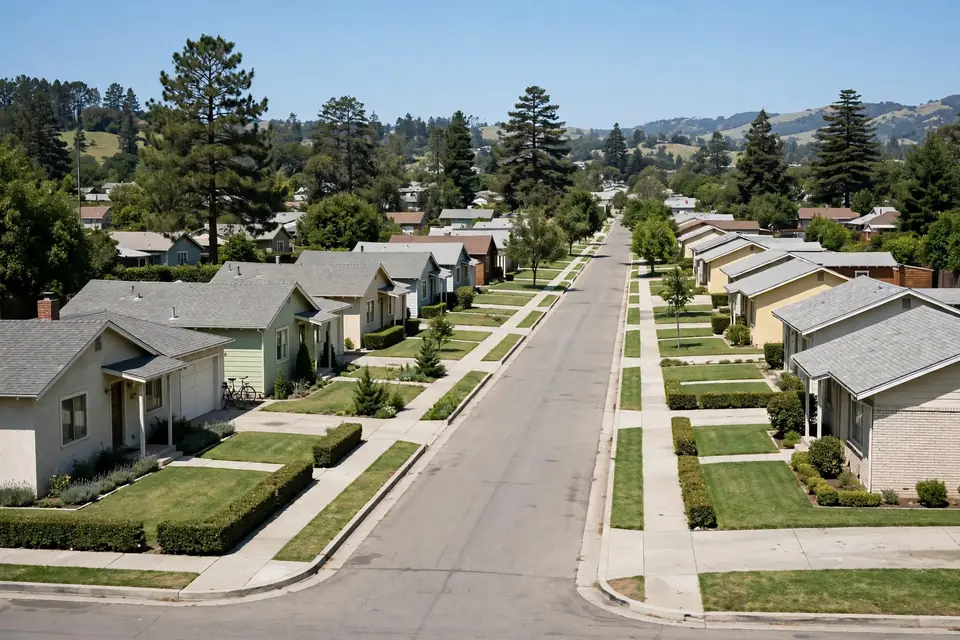
A classic mid-century tract where original-era roofs were replaced in waves. The current generation of replacements is arriving right on schedule.
| Neighborhood | Rollingwood, San Bruno, CA |
|---|---|
| ZIP code | 94066 |
| Housing | 1950s ranch homes, low-pitch gable/hip roofs, ~1,200–1,500 sq ft |
| Key streets & landmarks | Cottonwood Dr, Rollingwood Elementary (2500 Cottonwood Dr), Rollingwood Dr |
| Roofing note | Pitches at 3/12–4/12 — measured and classified; ventilation retrofit part of nearly every job |
Roofing Needs in Rollingwood
San Bruno's marine-layer fog and salt air take a steady toll on roofs across Rollingwood. Homes here typically wear architectural shingles with algae-resistant granules are the standard, with careful attention to corrosion-resistant flashing — and persistent moisture and corrosion mean small issues escalate fast. Our free inspection documents everything with photos.
Need roof replacement in San Bruno? Call (888) 974-0663 today.
Call NowEmergency Quick CallReplacement Services Available in Rollingwood
- Skylight Replacement During Reroof
- Roof Ventilation Upgrade
- Commercial Roof Replacement
- Asphalt Shingle Roof Replacement
- Tile Roof Replacement
- Metal Roof Replacement
Specialty Roofing Services in Rollingwood
- Asphalt Shingle Roof Replacement in Rollingwood
- Commercial Roof Replacement in Rollingwood
- Emergency Roof Replacement in Rollingwood
- Flat Roof Replacement (TPO & EPDM) in Rollingwood
- Insurance Claim Roof Replacement in Rollingwood
- Metal Roof Replacement in Rollingwood
- Partial Roof Replacement in Rollingwood
- Roof Tear-Off & Redecking in Rollingwood
- Roof Ventilation Upgrade in Rollingwood
- Skylight Replacement During Reroof in Rollingwood
- Storm Damage Roof Replacement in Rollingwood
- Tile Roof Replacement in Rollingwood
Nearby Areas We Also Serve
Crestmoor
Roof replacement in Crestmoor, San Bruno.
Mills Park
Roof replacement in Mills Park, San Bruno.
Portola Highlands
Roof replacement in Portola Highlands, San Bruno.
Bayhill
Roof replacement in Bayhill, San Bruno.
Helpful Guides
Roof Insurance Claims in San Bruno: How Replacement Coverage Really Works
Guide from Roof Replacement Co.
Energy-Efficient Roofing Options for San Bruno Homes
Guide from Roof Replacement Co.
Frequently Asked Questions
Do you replace roofs in Rollingwood?
Yes — Roof Replacement Co regularly completes roof replacements throughout Rollingwood and the wider San Bruno area. Call (888) 974-0663 for a free on-site estimate.
How much does roof replacement cost in Rollingwood?
Pricing in Rollingwood follows San Bruno-wide rates: architectural shingle replacement typically runs $9,000 to $15,000 for an average home, depending on size, pitch, and deck condition.
My ranch roof looks almost flat. Can it take shingles?
It depends on the measured pitch. At 4/12 and steeper, yes with standard installation. Between 2/12 and 4/12, shingles are allowed only with manufacturer-specified low-slope underlayment — we use self-adhering membrane there. At 2/12 or below, the honest answer is a membrane roof. We measure every slope during the inspection and show you the classification.
Why is ventilation such a big deal on these ranches?
The original gable vents were sized for 1950s construction, not for today's insulation levels and the fog belt's moisture load. Poor ventilation cooks shingles from below and traps damp against the deck — the two fastest ways to shorten a roof's life in San Bruno. The ridge-and-soffit retrofit we include is the single highest-value detail on a Rollingwood replacement.
How fast can you do a Rollingwood ranch?
One to two days for most, once the deck is verified. The simple rooflines and easy access make Rollingwood the fastest production in the city. Redecking, if needed, adds part of a day — priced per sheet in the original estimate.
Roofing in Rollingwood: 1950s Ranches, Honest Pitches
Rollingwood is classic post-war suburbia — Rollingwood Elementary at 2500 Cottonwood Dr, streets of 1950s ranch homes with low, straightforward rooflines. It is the most roof-friendly neighborhood in San Bruno: simple gable and hip roofs, good street access, no hillside complications. The roofing story here is not drama but diligence — these are 70-year-old roofs on 70-year-old houses, and the details that matter are the unglamorous ones: pitch minimums, ventilation, and deck condition.
The signature Rollingwood roofing fact is pitch. Many of these ranches were built at 3/12 or 4/12 — the low end of what asphalt shingles can waterproof. At those pitches, underlayment choice and installation quality decide everything: double underlayment or self-adhering membrane on the lowest slopes, meticulous flashing, zero shortcuts. The original 3-tab roofs are at end of life across the neighborhood; what replaces them needs to respect the pitch the house was given.
How Roof Replacement Works in Rollingwood
The inspection starts with a pitch gauge. Slopes at 4/12 and above get the standard architectural shingle system; slopes between 2/12 and 4/12 get self-adhering membrane under the shingles (double coverage, per manufacturer low-slope specs); anything at or below 2/12 is a membrane roof, not a shingle roof, and we say so plainly. Getting this classification right is the difference between a 30-year roof and a 10-year leak.
Ventilation retrofit is part of nearly every Rollingwood job — these ranches were built with small gable vents that cannot move modern moisture loads, and the fog belt punishes the deficit. We cut continuous ridge vent, open soffit intake, and baffle the rafter bays. Access is the easiest in San Bruno: wide streets, driveway staging, one-to-two-day production. The straightforward roof lets the crew focus on the details that actually decide lifespan.
Rollingwood Roof Replacement: Local Factors (ZIP 94066)
Rollingwood sits entirely within San Bruno's 94066 ZIP, in the flatlands between the hillside neighborhoods and the bayfront. The flat terrain and grid streets make it ideal for efficient roofing — material delivery is simple, staging is in the driveway, and production moves fast. Rollingwood Elementary and the surrounding post-war blocks give the neighborhood its stable, family character.
Permits are standard San Bruno residential building permits. One local note: because so many Rollingwood homes share the same 1950s ranch plans, we have deep familiarity with their framing and deck quirks — the estimate reflects that pattern knowledge, including which tracts tend to need redecking and which were built with solid panels from the start.