
Tile Roof Replacement in San Bruno, CA
Tile roofs define the look of so many San Bruno neighborhoods, and a proper tile roof replacement protects that character while delivering a roof that can last half a century. Whether your home has concrete or clay tile, we handle the full replacement: tear-off, underlayment renewal, batten and flashing replacement, and careful installation of new tile matched to your home's original profile.
What This Service Includes
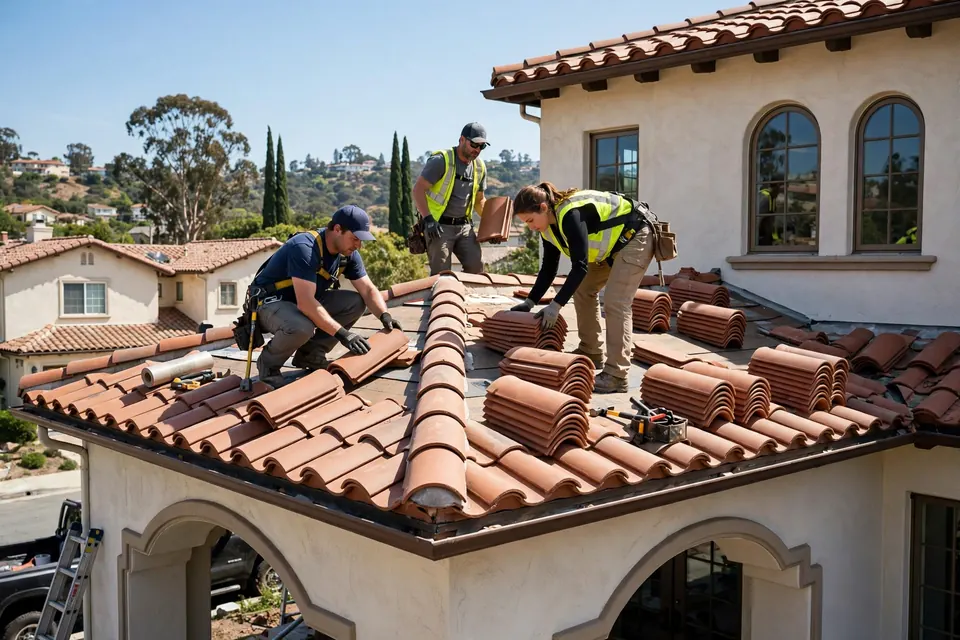
On most tile replacements, the tile itself outlives the underlayment beneath it. The critical work is what you cannot see: we strip the old tile (salvaging reusable pieces), replace the waterproofing underlayment, install new battens, flashings, and bird stops, then set the new tile to manufacturer specifications with proper headlap for our wind and rain patterns.
Need roof replacement in San Bruno? Call (888) 974-0663 today.
Call NowEmergency Quick CallSigns You Need This Service
- Cracked, slipped, or missing tiles
- Leaks despite intact-looking tile (underlayment failure)
- Tile age of 25+ years on the original underlayment
- Deteriorated mortar at ridges and hips
- Sagging areas indicating batten or deck issues
How We Do It Right
We work with concrete tile in flat, S, and Mediterranean profiles and clay tile where the architecture calls for it. Every replacement includes a double-layer high-performance underlayment system, new valley metal, and upgraded ridge ventilation. Tile is heavy — we verify the structure can carry the load, which is rarely an issue on homes originally built for tile but always worth confirming.
Tile Roof Replacement for San Bruno Homes
Tile suits San Bruno's architecture and climate beautifully — but moisture that never fully dries, salt-air corrosion of flashings, and wind-driven rain punish the underlayment beneath the tile. Our replacements focus on the waterproofing system as much as the tile itself.
Related Roofing Services
Roof Ventilation Upgrade
Balanced intake and exhaust ventilation designed into every San Bruno replacement — protects shingles and warranties.
Commercial Roof Replacement
Phased TPO, EPDM, and metal replacement for San Bruno businesses — watertight throughout, minimal disruption.
Asphalt Shingle Roof Replacement
Architectural shingle replacement for San Bruno homes: full tear-off, new underlayment, and premium shingles rated for marine-layer fog and salt air.
Metal Roof Replacement
Standing-seam and exposed-fastener metal roof replacement in San Bruno — 40-70 year lifespan, fire resistance, and energy-saving reflectivity.
Areas We Serve
Belle Air
Roof replacement in Belle Air, San Bruno.
Downtown San Bruno
Roof replacement in Downtown San Bruno, San Bruno.
Crestmoor
Roof replacement in Crestmoor, San Bruno.
Rollingwood
Roof replacement in Rollingwood, San Bruno.
Helpful Guides
How Much Does Roof Replacement Cost in San Bruno?
Guide from Roof Replacement Co.
Best Roofing Materials for San Bruno Homes, Compared Honestly
Guide from Roof Replacement Co.
Frequently Asked Questions
Do you have to replace the tiles, or just the underlayment?
If the tile is in good structural condition, a 'lift and relay' — removing tile, replacing underlayment, and reinstalling the same tile — can save significant money. We assess tile condition honestly and recommend whichever approach makes sense.
How long does a tile roof last?
The tile itself can last 50 years or more. The underlayment beneath it typically lasts 20 to 30 years, which is why most tile replacements are really underlayment replacements with new or relayed tile.
My tile looks fine but the roof leaks. Do I need new tile?
Usually not new tile — you need new underlayment. Tile is a water-shedding shell; the underlayment beneath does the waterproofing, and 30 to 40 year old felt underlayment is typically done. The standard fix is a lift-and-relay: we remove the tile, install a new underlayment system, and reinstall the same tile with new fasteners and flashings. You keep the look and get a new watertight roof for far less than full replacement.
Is my house strong enough for tile?
Most San Bruno homes built with tile originally are. Homes built for lightweight roofs may need an engineer's review before tile goes on — we arrange that assessment rather than guessing. Weight is the one thing about tile you cannot negotiate with, so the structural check happens before any contract is signed.
How Tile Roof Replacement Works in San Bruno
Tile replacement starts with a structural question other roofs skip: can the framing carry it? Clay and concrete tile weigh 600 to 1,100 pounds per square — several times an asphalt roof. Before we quote, we verify rafter sizes, spans, and the existing load path, because honesty here prevents a sagging ridge later. Many San Bruno Spanish-style homes were built for tile and carry it fine; some were not, and we will tell you which yours is.
The old tile comes off and gets sorted — intact pieces are saved for reuse or salvage matching. Underneath, the truth appears: on 40-year-old tile roofs, the underlayment (the actual waterproofing) is usually finished even though the tile looks fine. We strip to the deck, repair as needed, and install a new high-performance underlayment system, often two layers, with new battens. Then tile goes back on with corrosion-resistant fasteners, hips and ridges bedded to shed wind-driven rain, and every flashing renewed in metal that resists salt air.
Clay vs. Concrete Tile: Materials We Install
Clay tile is the premium choice — color-through, century-capable, and the right look for San Bruno's Spanish and Mediterranean homes in Mills Park and older neighborhoods. Concrete tile costs less, comes in more profiles, and still outlasts two asphalt roofs. Both need the same thing underneath: a first-class underlayment, because tile sheds water but does not waterproof. We use self-adhering or double-layer synthetic underlayments rated for tile's heat and weight.
Matching matters on partial work: manufacturers discontinue profiles constantly, so we maintain salvage sources for common discontinued tiles across the Peninsula. Hips, ridges, and rakes get mortar or foam adhesive rated for seismic movement — rigid mortar alone cracks in our earthquake country. Fasteners are stainless or hot-dipped; standard electro-galvanized nails streak and fail in salt air within a decade.