
7 Signs Your San Bruno Home Needs a Roof Replacement
Most roofs do not fail overnight — they send warnings for years. Here are the seven signs San Bruno homeowners should never ignore, and what each one means.
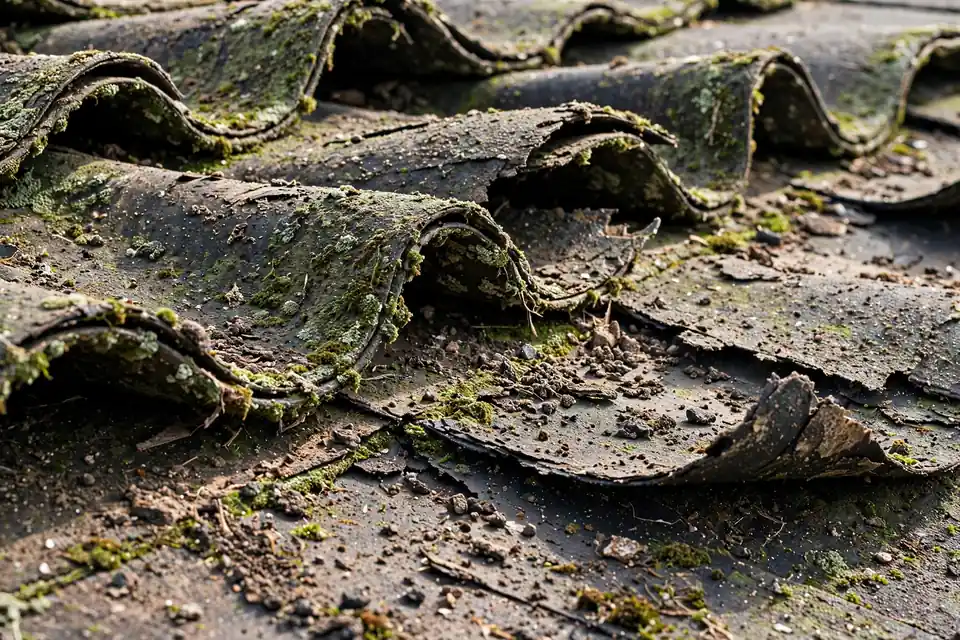
1. Curling, cupping, or clawing shingles
When shingle edges turn up or the centers bubble, the asphalt is drying out and the shingle is losing its ability to shed water. In San Bruno's persistent marine-layer fog, salt air, and gusty Peninsula winds, this aging accelerates — curled shingles are past their prime.
2. Granule loss and bald spots
Those sand-like granules protect the asphalt from UV. Check your gutters: heavy granule buildup means the shingles are thinning. Bald spots are shingles on borrowed time.
3. Cracked, missing, or wind-lifted shingles
A few missing shingles after a storm can be repaired. Widespread lifting or cracking across slopes means the fastening system is failing and replacement is the economical fix.
4. Daylight or water stains in the attic
Go into the attic on a sunny day. Pinpoints of daylight mean holes; dark staining on the deck means active or past leaks. Either way, the roofing system is compromised.
5. Sagging roof planes
A sagging deck indicates structural or sheathing damage — often from long-term moisture. This needs professional assessment promptly, not next season.
6. Moss, algae, and persistent staining
In San Bruno's damp microclimates, biological growth holds moisture against the shingles and accelerates decay. Some staining is cosmetic; widespread colonization is not.
7. Age: the calendar does not lie
Three-tab shingles last 15-20 years here; architectural shingles 20-30. If your roof is past its material's expected life, start planning the replacement on your schedule instead of the roof's.
Need roof replacement in San Bruno? Call (888) 974-0663 today.
Call NowEmergency Quick CallRelated Services
Areas We Serve
Belle Air
Roof replacement in Belle Air, San Bruno.
Downtown San Bruno
Roof replacement in Downtown San Bruno, San Bruno.
More Guides
How Much Does Roof Replacement Cost in San Bruno?
Guide from Roof Replacement Co.
Roof Repair vs. Replacement: How San Bruno Homeowners Should Decide
Guide from Roof Replacement Co.
Frequently Asked Questions
My roof is 22 years old but looks okay. Should I replace it?
Get an inspection. Some 22-year-old roofs have five good years left; others are one storm from failure. An honest assessment beats guessing — we will tell you which one yours is.
Can I just repair the bad spots?
Spot repairs make sense when damage is truly localized and the roof is mid-life. When the warning signs are widespread, repairs become a subscription you keep paying until the inevitable replacement.
The Attic Tells the Truth First
Before you study the shingles, look in the attic — in San Bruno's fog belt, the deck underside fails before the shingle surface does. Bring a flashlight on a dry day and look for dark staining on the plywood, sagging between rafters, daylight pinpricks around nails, and damp insulation. Musty smell is a finding, not a quirk: it means moisture is living where it should not.
Pay special attention around penetrations — plumbing vents, chimneys, skylight curbs — where flashing failures show as stained rings on the deck. Photograph everything with dates. When our inspector arrives, those photos focus the conversation on evidence rather than impressions, and they become the baseline if an insurance claim ever enters the picture.
Granule Loss: Reading Your Gutters
Asphalt shingles shed granules as they age — the sand-like grit in your gutters and at downspout outlets is the roof's slow autobiography. Some granule loss is normal in the first year (loose manufacturing excess); steady accumulation year after year is the protective layer leaving. Run your hand across a shingle: if the asphalt mat shows through in patches, the waterproofing is exposed to UV and the clock is ticking.
In the fog belt, granule loss accelerates the algae cycle — bare mat holds moisture, moisture feeds growth, growth holds more moisture. Gutters full of granules plus black streaking on the north slope is the classic San Bruno end-of-life signature. It does not mean emergency replacement tomorrow, but it means the inspection should happen this season, not next.