
Metal Roof Replacement in San Bruno, CA
A metal roof replacement is a long-term investment: standing-seam and stone-coated metal systems routinely last 40 to 70 years, far outliving asphalt. For San Bruno homeowners dealing with persistent moisture and corrosion, metal's durability, fire resistance, and low maintenance make it one of the smartest replacement choices available.
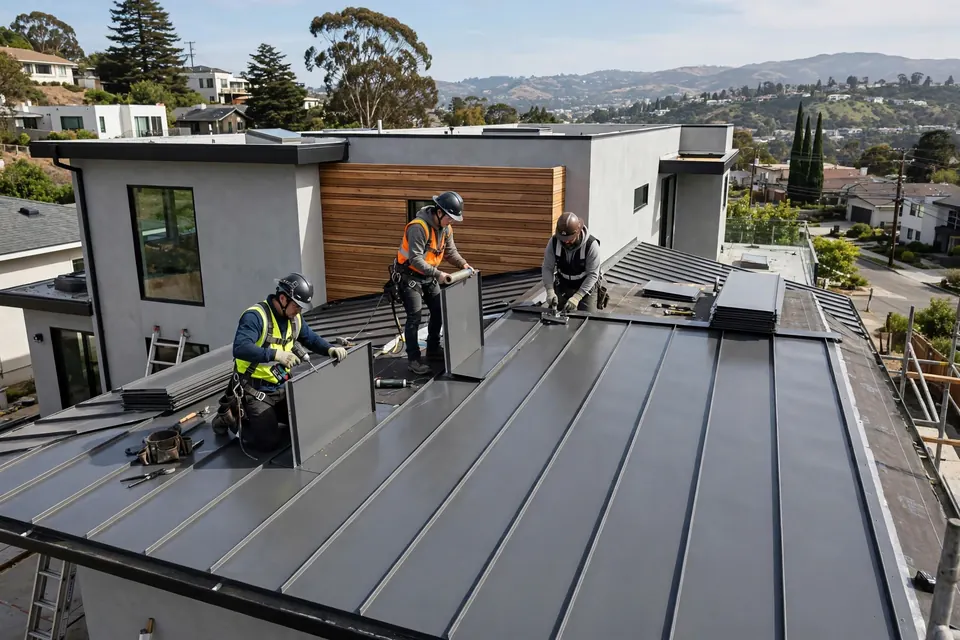
What This Service Includes
We remove the existing roofing and install a complete metal roofing system — typically concealed-fastener standing seam — over a high-temperature underlayment with new flashing throughout. The panels interlock and expand freely with temperature changes, which is critical in a climate with big daily temperature swings.
Need roof replacement in San Bruno? Call (888) 974-0663 today.
Call NowEmergency Quick CallSigns You Need This Service
- An aging roof you never want to replace again
- Frequent shingle loss in wind events
- Desire for a fire-resistant roofing assembly
- High cooling bills that a reflective metal roof could reduce
- Plans to add solar panels (metal is the ideal substrate)
How We Do It Right
We install 24- or 26-gauge steel standing-seam panels with Kynar 500 finishes, or stone-coated steel shingles where a traditional look is preferred. Every replacement includes high-temp ice-and-water shield, snow guards where drifting is a concern, and ventilation balanced for the new assembly. Metal costs more upfront than shingles — typically two to three times — but over a 50-year horizon it is often the cheapest roof you can own.
Metal Roof Replacement for San Bruno Homes
San Bruno's persistent marine-layer fog, salt air, and gusty Peninsula winds make metal an especially smart investment: it shrugs off moisture that never fully dries, salt-air corrosion of flashings, and wind-driven rain, resists fire, and its reflective finishes cut cooling loads in summer.
Related Roofing Services
Commercial Roof Replacement
Phased TPO, EPDM, and metal replacement for San Bruno businesses — watertight throughout, minimal disruption.
Asphalt Shingle Roof Replacement
Architectural shingle replacement for San Bruno homes: full tear-off, new underlayment, and premium shingles rated for marine-layer fog and salt air.
Tile Roof Replacement
Clay and concrete tile roof replacement in San Bruno, including underlayment renewal — the waterproofing layer that decides a tile roof's life.
Flat Roof Replacement (TPO & EPDM)
TPO, EPDM, and modified bitumen replacement for San Bruno flat and low-slope roofs, with drainage corrected and seams heat-welded.
Areas We Serve
Belle Air
Roof replacement in Belle Air, San Bruno.
Downtown San Bruno
Roof replacement in Downtown San Bruno, San Bruno.
Crestmoor
Roof replacement in Crestmoor, San Bruno.
Rollingwood
Roof replacement in Rollingwood, San Bruno.
Helpful Guides
Energy-Efficient Roofing Options for San Bruno Homes
Guide from Roof Replacement Co.
How Much Does Roof Replacement Cost in San Bruno?
Guide from Roof Replacement Co.
Frequently Asked Questions
Is a metal roof noisy in rain?
No — not when installed correctly. With solid decking, quality underlayment, and attic insulation, a metal roof is no louder than shingles. Most of our customers never notice a difference.
Will a metal roof make my house hotter?
The opposite. Reflective metal finishes bounce solar heat away, and with proper ventilation a metal roof typically keeps attics cooler than dark asphalt shingles.
Is a metal roof noisy when it rains?
Not on a house. The noise reputation comes from barns with metal over open purlins. On your home, the metal sits over solid decking, underlayment, and an insulated attic — rain sounds about the same as it did on shingles. Most homeowners notice no difference, and some find heavy rain quieter.
Will a metal roof survive San Bruno's winter windstorms?
That is exactly what standing seam is engineered for. Concealed-clip systems are rated for uplift well beyond what Peninsula storms deliver, and there are no exposed fastener heads for wind to work loose. After atmospheric-river winters, metal roofs are consistently the systems with the least damage in our inspection routes.
How Metal Roof Replacement Works in San Bruno
Metal roofing is a precision system, not just panels on a roof. After full tear-off and deck repair, we install a high-temperature underlayment — standard synthetics can soften under dark metal in direct sun, and San Bruno's sunny pockets like Mills Park get hot enough to matter. Then comes the clip or fastener layout, snapped to chalk lines across the entire roof so every seam lands straight; a wavy seam line is the telltale sign of a rushed metal job.
Standing-seam panels are roll-formed on site to exact rafter lengths, which eliminates horizontal joints — the leak point on older metal roofs. Panels lock to concealed clips that allow thermal movement; the metal expands and contracts daily, and the clip system lets it float instead of working fasteners loose. Exposed-fastener systems cost less but need their screws checked and re-seated over the years, so we are upfront about which system fits your budget and how long you plan to own the home.
Metal Roofing Materials: What We Recommend
For San Bruno's salt air, aluminum or coated steel with a Kynar 500 finish is the right call — the finish warranty, not just the metal, is what you are buying. We use 24 or 26 gauge steel where steel is chosen; thinner panels oil-can (that wavy look) and dent under foot traffic. Aluminum costs more but simply does not rust, which matters within a few miles of the Bay.
Every metal roof we install carries a Class A fire rating — the highest — which matters near the San Bruno Mountain wildland edge and for insurance in hillside zones. Reflective colors cut attic heat measurably, and the 40 to 70 year service life means most homeowners never roof again. Underlayment, clips, and fasteners are all stainless or rated for dissimilar-metal contact, because salt air accelerates galvanic corrosion where metals meet.