
Roof Tear-Off & Redecking in San Bruno, CA
Every roof replacement we do in San Bruno starts with a full tear-off, because the deck beneath the shingles is the foundation of the entire system. When tear-off reveals rotted, delaminated, or under-built sheathing, redecking — replacing the damaged wood with new code-compliant sheathing — is what separates a roof that lasts 30 years from one that fails in 12.
What This Service Includes
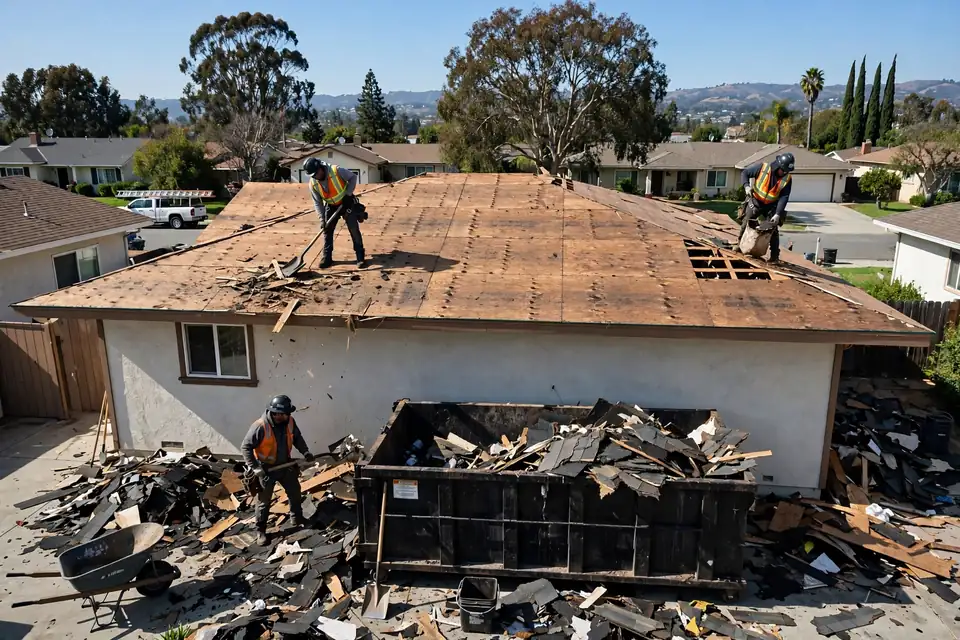
We strip all existing roofing layers, fasteners, and underlayment down to the bare deck. Every sheet of sheathing is inspected: soft spots, delamination, water staining, and inadequate nailing are marked. Damaged sections are cut out and replaced with new OSB or plywood of the correct thickness, properly gapped and nailed to current code, before a single square of new roofing goes on.
Need roof replacement in San Bruno? Call (888) 974-0663 today.
Call NowEmergency Quick CallSigns You Need This Service
- A spongy or bouncy feeling when walking the roof
- Visible sagging between rafters
- Water stains on the underside of the deck in the attic
- Multiple existing roofing layers adding hidden weight
- Homes built before modern sheathing standards (common in San Bruno's older neighborhoods)
How We Do It Right
Redecking is priced per sheet so you only pay for what is actually replaced — and we photograph every replaced section for your records. In San Bruno we frequently find original 1950s-70s sheathing that has served well but is too thin or too damaged for another 30-year roof. Replacing it now, while the roof is open, costs a fraction of what a premature re-roof would cost later.
Roof Tear-Off & Redecking for San Bruno Homes
In San Bruno, where classic Bay Area bungalows, mid-century tract homes in Rollingwood, and hillside properties in Crestmoor and Portola Highlands, we routinely uncover original sheathing that has earned retirement. Redecking during replacement is the foundation a 30-year roof demands.
Related Roofing Services
Storm Damage Roof Replacement
Storm damage assessment, carrier-grade documentation, and full replacement for San Bruno homes hit by marine-layer fog and salt air.
Insurance Claim Roof Replacement
We document damage, meet your adjuster, and manage supplements for San Bruno insurance roof replacement claims.
Emergency Roof Replacement
Emergency dry-in and fast-tracked full replacement for San Bruno homes with active leaks or storm damage. Call line answered 24/7.
Partial Roof Replacement
Targeted replacement of damaged roof sections for San Bruno homes — matched materials, proper tie-ins, full warranty on our work.
Areas We Serve
Belle Air
Roof replacement in Belle Air, San Bruno.
Downtown San Bruno
Roof replacement in Downtown San Bruno, San Bruno.
Crestmoor
Roof replacement in Crestmoor, San Bruno.
Rollingwood
Roof replacement in Rollingwood, San Bruno.
Helpful Guides
The Roof Replacement Process, Step by Step
Guide from Roof Replacement Co.
How Much Does Roof Replacement Cost in San Bruno?
Guide from Roof Replacement Co.
Frequently Asked Questions
How do I know if my deck needs replacing before you tear off?
Honestly, you cannot know for certain until the old roofing comes off — which is why our estimates include a per-sheet redecking allowance with photo documentation, instead of a surprise change order.
Can you just go over bad decking with new plywood?
Overlaying new sheathing over rotted wood traps the problem rather than solving it. We remove damaged material and replace it properly.
How do I know if my roof needs redecking or just new shingles?
You often cannot tell from outside — that is what the tear-off inspection is for. Warning signs from inside the attic: spongy or sagging areas between rafters, daylight through gaps, or visible rot around old leak stains. Homes with original 1x skip sheathing (common pre-1950s in San Bruno) almost always need redecking for a modern system. Our estimate includes a per-sheet redecking price so there are no surprises if the deck needs work.
Will tear-off damage my landscaping or siding?
Not with proper protection. We tarp plantings, shield windows and siding near the work zone, and control the debris stream into the trailer rather than letting it free-fall. Tear-off day is loud and busy, but a professional crew leaves the property as it found it — our final walkthrough includes the yard, not just the roof.
How Roof Tear-Off and Redecking Works
Tear-off is where hidden problems surface, and redecking is how we fix them permanently. The crew strips every layer — and in Downtown San Bruno's oldest cottages we sometimes find three — down to the bare deck. Then the deck gets inspected sheet by sheet: delaminated plywood, rotted sections around old leaks, and the 1x skip sheathing common in pre-1950s homes all get marked. Soft sections are cut out and replaced; the entire deck is re-nailed to current fastening schedules.
Homes with original skip sheathing (spaced 1x boards) get full redecking with 7/16-inch OSB or 1/2-inch plywood over the old boards — modern shingles and underlayment need a solid nailable surface, and skip sheathing telegraphs gaps through the new roof within a few years. The new deck is the foundation the next 30 years sit on, so we do not rush this step: every sheet is gapped for expansion, nailed to the rafter layout, and verified before a single shingle goes down.
Decking Materials and Site Protection
We redeck with 7/16-inch OSB or 1/2-inch CDX plywood, ring-shank nailed — ring-shank nails resist the withdrawal that smooth nails suffer as the deck cycles through fog-damp mornings and dry afternoons. On skip-sheathed homes, the new panels go directly over the old boards after any rotted boards are replaced, creating a solid, code-compliant substrate. Ice-and-water membrane and synthetic underlayment follow the moment the deck is verified.
Tear-off is the messiest day of roofing, so protection is systematic: tarps over landscaping and AC units, plywood shields over windows near the eave, and a dump trailer positioned to catch debris at the tear-off edge. The crew works slope by slope, and magnetic sweepers run the property at day's end and again at final cleanup. Redecking adds a day to most jobs; it adds decades to the roof.