
Roof Insurance Claims in San Bruno: How Replacement Coverage Really Works
Insurance covers sudden damage — not old age. Understanding that distinction, and documenting damage correctly, is the difference between an approved replacement and a denial.
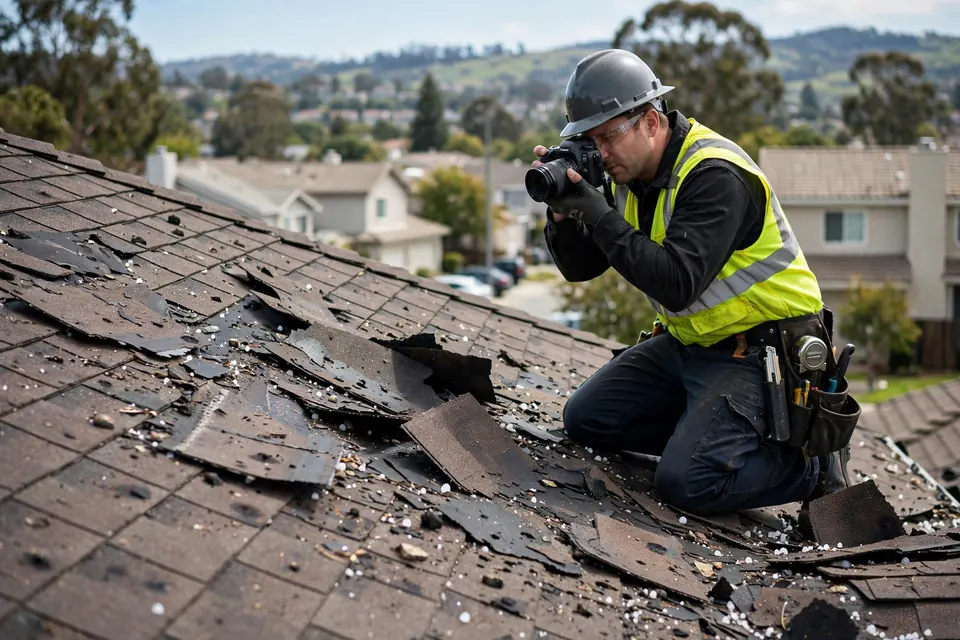
What insurance actually covers
Homeowners policies cover sudden, accidental damage: wind, hail, fallen trees, fire. They do not cover wear, age, neglect, or pre-existing issues. A 28-year-old roof leaking from age is maintenance; the same roof with wind-torn shingles after a storm is a claim.
The documentation that gets claims approved
Adjusters approve what they can verify. Our claim documentation includes dated photos of every slope, hail-hit counts per test square, wind-damage mapping, and collateral damage (gutters, vents, siding). This is the evidence package that turns 'maybe' into 'approved.'
ACV vs. replacement cost policies
Actual cash value policies pay the depreciated value of your old roof — often far less than replacement cost. Replacement cost policies pay the full replacement minus your deductible, usually in two checks (ACV first, recoverable depreciation after completion). Know which you have before you file.
The adjuster meeting: why your contractor should attend
We meet adjusters on the roof with our documentation in hand. Items commonly missed in initial settlements — ridge caps, starter course, flashing, drip edge, code upgrades — get added through supplements with photo evidence. This step routinely adds thousands to approved settlements.
Need roof replacement in San Bruno? Call (888) 974-0663 today.
Call NowEmergency Quick CallRelated Services
Areas We Serve
Belle Air
Roof replacement in Belle Air, San Bruno.
Downtown San Bruno
Roof replacement in Downtown San Bruno, San Bruno.
More Guides
How Much Does Roof Replacement Cost in San Bruno?
Guide from Roof Replacement Co.
7 Signs Your San Bruno Home Needs a Roof Replacement
Guide from Roof Replacement Co.
Frequently Asked Questions
Should I file a claim before knowing if there is damage?
No. Get a professional inspection first. Filing a claim that results in zero payout can still count as claim activity on your record.
How long does the claims process take?
Simple approvals: two to six weeks. Disputed or supplemented claims: two to four months. We keep the process moving with prompt documentation at every step.
Covered vs. Not Covered: The Line Carriers Draw
Homeowners insurance covers sudden, accidental damage: wind-torn shingles, a fallen tree limb, fire, vandalism. It does not cover wear, age, neglect, or the fog belt's slow moisture — a 28-year-old roof that simply wore out is maintenance, not a claim. The line carriers draw is suddenness: can the damage be tied to a specific event on a specific date? That is why storm-date documentation and timestamped photos decide claims.
San Bruno's reality: most legitimate claims here are wind events during atmospheric-river winters — creased and torn shingles, lifted ridge caps. Hail is rare; earthquake damage to roofing is a separate earth-movement exclusion on most policies. If the damage is ambiguous, a professional inspection before filing protects you from a denied claim on your record.
Depreciation, Recoverable, and Your Deductible
On a replacement-cost policy, the carrier first pays actual cash value (replacement cost minus depreciation for the roof's age), then releases the withheld depreciation when the work is complete and invoiced. You fund the deductible; the carrier funds the rest in two checks. Understanding this sequence prevents the most common confusion — the first check is not the whole settlement.
Supplements are part of the process, not a dispute: when tear-off reveals code-required upgrades (current nailing schedules, ice-and-water membrane San Bruno now expects), those get documented and submitted with code citations. Carriers pay for documented code compliance. What you should never do: sign over your benefits to a contractor, or sign a contract before the adjuster's scope exists. The scope sets the budget; the contractor earns it by executing.