
Roof Replacement in Lomita Park, San Bruno, CA
Bungalow streets near San Bruno Avenue. Simple roof geometry and easy access make these some of the most efficient replacements we do.
| Neighborhood | Lomita Park, San Bruno, CA |
|---|---|
| ZIP code | 94066 |
| Housing | 1960s–70s tract and split-level homes on larger landscaped lots near the mountain foothills |
| Key streets & landmarks | Santa Helena Ave, Lomita Park Elementary (200 Santa Helena Ave), Skyline College area |
| Roofing note | Foggiest corner of San Bruno; algae-resistant shingles standard; flashing renewed, never reused |
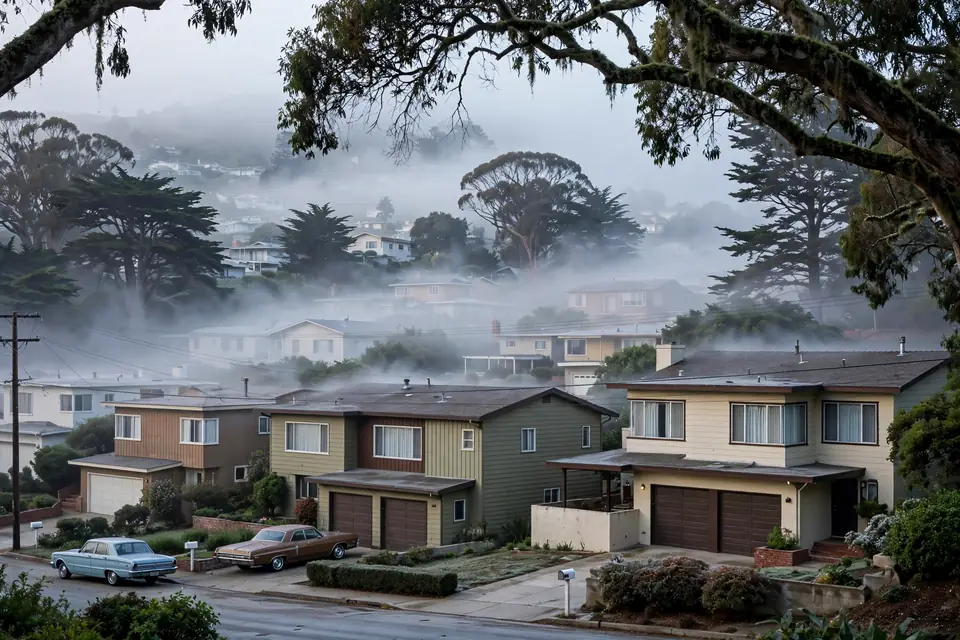
Roofing Needs in Lomita Park
San Bruno's marine-layer fog and salt air take a steady toll on roofs across Lomita Park. Homes here typically wear architectural shingles with algae-resistant granules are the standard, with careful attention to corrosion-resistant flashing — and persistent moisture and corrosion mean small issues escalate fast. Our free inspection documents everything with photos.
Need roof replacement in San Bruno? Call (888) 974-0663 today.
Call NowEmergency Quick CallReplacement Services Available in Lomita Park
- Skylight Replacement During Reroof
- Roof Ventilation Upgrade
- Commercial Roof Replacement
- Asphalt Shingle Roof Replacement
- Tile Roof Replacement
- Metal Roof Replacement
Specialty Roofing Services in Lomita Park
- Asphalt Shingle Roof Replacement in Lomita Park
- Commercial Roof Replacement in Lomita Park
- Emergency Roof Replacement in Lomita Park
- Flat Roof Replacement (TPO & EPDM) in Lomita Park
- Insurance Claim Roof Replacement in Lomita Park
- Metal Roof Replacement in Lomita Park
- Partial Roof Replacement in Lomita Park
- Roof Tear-Off & Redecking in Lomita Park
- Roof Ventilation Upgrade in Lomita Park
- Skylight Replacement During Reroof in Lomita Park
- Storm Damage Roof Replacement in Lomita Park
- Tile Roof Replacement in Lomita Park
Nearby Areas We Also Serve
Crestmoor
Roof replacement in Crestmoor, San Bruno.
Rollingwood
Roof replacement in Rollingwood, San Bruno.
Mills Park
Roof replacement in Mills Park, San Bruno.
Portola Highlands
Roof replacement in Portola Highlands, San Bruno.
Helpful Guides
Roof Insurance Claims in San Bruno: How Replacement Coverage Really Works
Guide from Roof Replacement Co.
Energy-Efficient Roofing Options for San Bruno Homes
Guide from Roof Replacement Co.
Frequently Asked Questions
Do you replace roofs in Lomita Park?
Yes — Roof Replacement Co regularly completes roof replacements throughout Lomita Park and the wider San Bruno area. Call (888) 974-0663 for a free on-site estimate.
How much does roof replacement cost in Lomita Park?
Pricing in Lomita Park follows San Bruno-wide rates: architectural shingle replacement typically runs $9,000 to $15,000 for an average home, depending on size, pitch, and deck condition.
Why does my roof grow moss when my friend's across town doesn't?
Location and shade. Lomita Park's western position keeps roofs damp hours longer than downtown or the east side, and mature trees add shade — moss needs exactly that combination. It is not a maintenance failure; it is the microclimate. Algae-resistant shingles, zinc strips, and trimming back overhangs are the durable answers.
Should I replace the flashing if it's not leaking yet?
In Lomita Park, yes at reroof time. The constant damp corrodes galvanized flashing from the pinholes outward, and flashing that looks intact at tear-off is often months from failure. New flashing in corrosion-resistant metal costs little during a replacement and everything as a standalone repair later.
My attic smells musty. Is that a roof problem?
Often it is a ventilation problem the roof replacement should fix. Fog-belt moisture trapped in an under-vented attic grows mold on the sheathing and insulation. Our inspection includes the attic — if the deck underside shows staining, the replacement scope includes the ventilation rebuild that stops it.
Roofing in Lomita Park: San Bruno’s Foggiest Corner
Lomita Park occupies San Bruno's western edge — Lomita Park Elementary at 200 Santa Helena Ave, the foothill streets rising toward the San Bruno Mountain flank — and it holds the city's moisture record. The marine layer arrives here first and leaves last; on summer mornings the fog can sit over Lomita Park hours after downtown has cleared. Roofs here live damp. Algae streaking, moss colonization, and premature flashing corrosion are not possibilities but the baseline condition we design against.
The housing — 1960s and 70s tract and split-level homes on larger landscaped lots — compounds it. Mature trees shade many roofs into midday, so drying is slow even when the fog lifts. Original galvanized flashings on these homes are typically the first thing to fail: the constant damp finds every pinhole. And attic ventilation, often just small gable vents on these designs, cannot move the moisture load — we find more deck-underside staining in Lomita Park attics than anywhere else in 94066.
How Roof Replacement Works in Lomita Park
Moisture detailing leads every Lomita Park replacement. Algae-resistant architectural shingles are the default — not the upgrade — and we add zinc strips on the worst shaded slopes because the fog belt earns them. Every flashing is replaced, never reused: step flashing, counter flashing, pipe boots, and valley metal all go new in corrosion-resistant metal, since the old galvanized pieces are usually the leak source that prompted the call.
Ventilation gets rebuilt as part of the system: continuous ridge exhaust, opened soffit intake, baffles to keep insulation clear. On these split-levels the attic geometry is complex, so we verify airflow path by path rather than assuming. The larger lots make staging easy — room for the trailer and material pallets without the downtown squeeze — and most Lomita Park homes complete in two days.
Lomita Park Roof Replacement: Local Factors (ZIP 94066)
Lomita Park is entirely within San Bruno's 94066 ZIP, on the city's western side near the Skyline College area and the mountain foothills. The western exposure is the whole story: weather systems arrive here first, fog lingers longest, and wind hits hardest at the foothill edge. Estimates here weight moisture detailing heavier than any other San Bruno neighborhood.
Tree coordination matters: many Lomita Park lots have mature trees overhanging the roof, and trimming before the reroof protects the new shingles from abrasion and debris. We can coordinate timing with your tree service or recommend one. Permits are standard San Bruno residential — we pull them and meet the inspector on site.