
Energy-Efficient Roofing Options for San Bruno Homes
Your roof is your home's largest heat-exchange surface. Choosing the right energy-efficient roofing system can cut peak cooling demand substantially in San Bruno's persistent marine-layer fog, salt air, and gusty Peninsula winds.
Cool-roof shingles
Infrared-reflective granules let these shingles wear traditional colors while reflecting far more solar heat than standard shingles. The most cost-effective efficiency upgrade for pitched roofs.
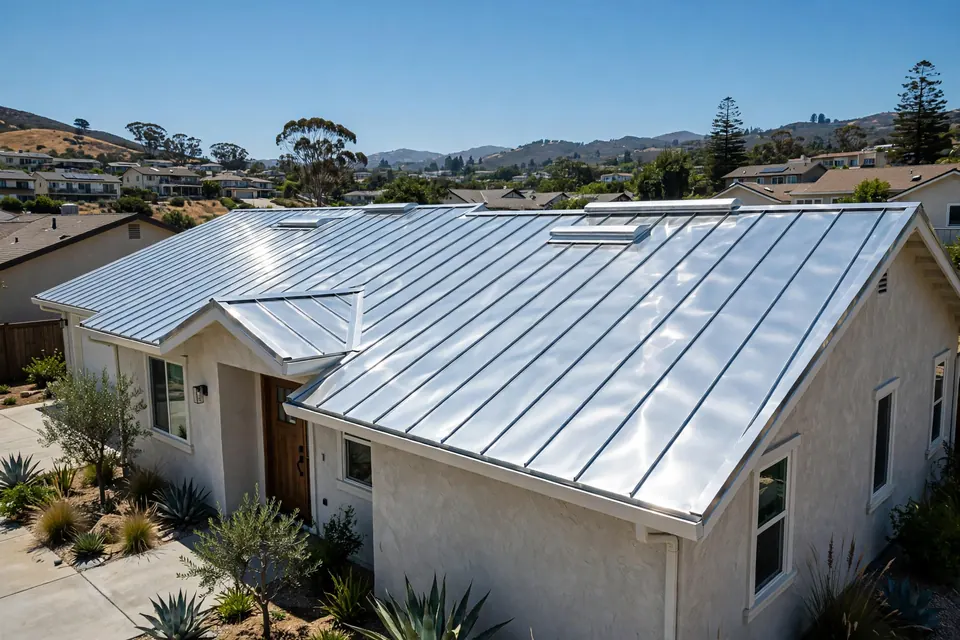
Reflective metal roofing
Standing-seam metal with reflective finishes is the efficiency champion for pitched roofs — reflecting heat, emitting what it absorbs, and lasting decades.
White TPO for flat sections
On low-slope roofs, white TPO membrane reflects the majority of solar energy. The cooling difference versus a dark built-up roof is dramatic.
Ventilation: the force multiplier
Reflective surfaces plus balanced attic ventilation compound each other's benefits. A cool roof over a trapped, superheated attic underperforms; the same roof over a ventilated attic transforms comfort.
Radiant barriers and insulation coordination
During replacement, adding a radiant barrier or upgrading attic insulation alongside the new roof captures savings that neither improvement achieves alone. We evaluate the whole thermal assembly, not just the surface.
Need roof replacement in San Bruno? Call (888) 974-0663 today.
Call NowEmergency Quick CallRelated Services
Areas We Serve
Belle Air
Roof replacement in Belle Air, San Bruno.
Downtown San Bruno
Roof replacement in Downtown San Bruno, San Bruno.
More Guides
How Much Does Roof Replacement Cost in San Bruno?
Guide from Roof Replacement Co.
7 Signs Your San Bruno Home Needs a Roof Replacement
Guide from Roof Replacement Co.
Frequently Asked Questions
Will an energy-efficient roof really lower my bills?
Yes — particularly peak summer cooling. The exact savings depend on your insulation, ventilation, and AC system, and we will give you a realistic range rather than a fantasy number.
Are there tax credits or rebates?
CA utility and energy programs change regularly. We track current incentives and flag every one your project qualifies for during the estimate.
Cool Roofs in the Fog Belt: What Actually Works
San Bruno's climate complicates the cool-roof story: the marine layer already moderates summer heat, so reflective roofing's payoff is smaller here than inland — but real on sunny afternoons, especially in the sunnier pockets like Mills Park. Light-colored architectural shingles with reflective granules run measurably cooler than dark ones; standing-seam metal with reflective Kynar finish runs cooler still. On flat sections, white TPO is the obvious cool choice.
The bigger efficiency lever in the fog belt is ventilation, not reflectivity. A superheated, unvented attic forces the cooling system to fight radiant heat all evening; balanced ridge-and-soffit ventilation exhausts it for free. Pair a lighter roof color with proper ventilation at replacement time and you get the full benefit — comfort first, bill savings second, at minimal incremental cost.
Insulation, Ventilation, and the Whole Attic
The roof replacement is the moment to fix the attic as a system. Old compressed insulation, blocked soffits, and bath fans venting into the attic (moisture straight into the framing — common in 1960s San Bruno homes) all get addressed while the roof is open. Blown insulation topped to current R-values, baffles keeping the vent path clear, and every exhaust fan ducted through the roof with proper flashing — the attic becomes dry, ventilated, and efficient.
Radiant barriers (reflective foil under the deck) help in hot climates; in San Bruno's mild summers the payoff is modest, and we say so rather than selling it. The honest efficiency package here: reflective or light roofing, balanced ventilation, correct insulation, sealed attic bypasses. Unsexy, measurable, and permanent.