
How to Prepare Your Home for Roof Replacement Day
A little preparation before the crew arrives makes replacement day smoother, quieter, and safer for your property. Here is our complete homeowner checklist.
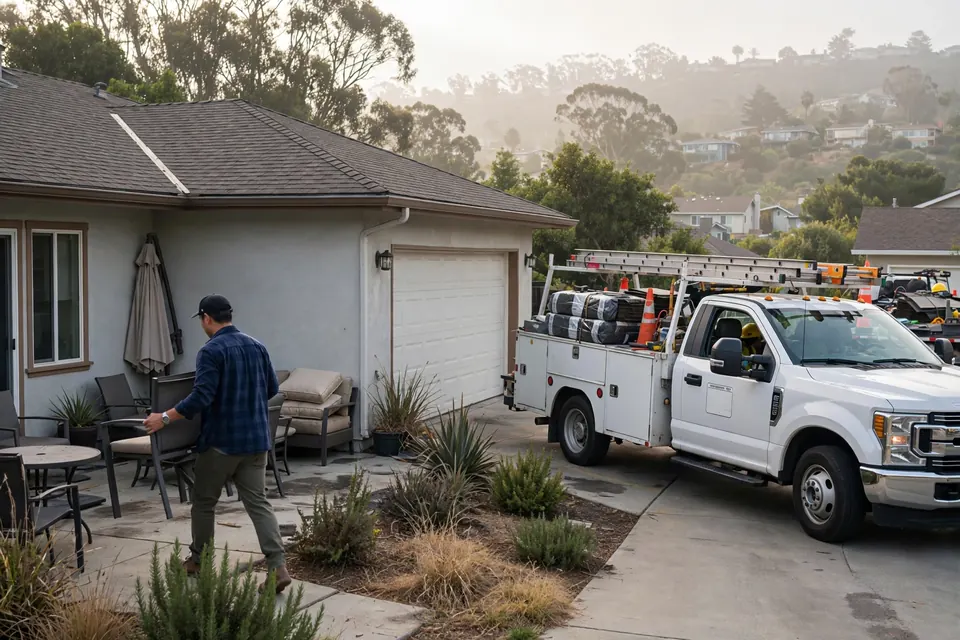
Outside: clear the work zone
Move vehicles from the driveway and away from the house — crews need the driveway for the dump trailer. Relocate patio furniture, grills, potted plants, and anything fragile within the drop zone. Mark sprinkler heads and delicate landscaping you want protected.
Inside: prepare for vibration
Tear-off creates significant vibration. Take pictures and fragile items off walls, especially on upper floors. Cover items in the attic with tarps or old sheets — dust and small debris will filter down.
Kids, pets, and daily life
The work zone is a construction site: keep children and pets indoors and away from the yard during work hours. If you work from home, plan for noise — tear-off day is the loudest. Most families find day two dramatically calmer.
Access and communication
Ensure the crew has gate codes, outdoor outlet access if needed, and your current phone number. Designate one decision-maker in your household for any day-of questions — it keeps the project moving.
Need roof replacement in San Bruno? Call (888) 974-0663 today.
Call NowEmergency Quick CallRelated Services
Areas We Serve
Belle Air
Roof replacement in Belle Air, San Bruno.
Downtown San Bruno
Roof replacement in Downtown San Bruno, San Bruno.
More Guides
How Much Does Roof Replacement Cost in San Bruno?
Guide from Roof Replacement Co.
7 Signs Your San Bruno Home Needs a Roof Replacement
Guide from Roof Replacement Co.
Frequently Asked Questions
Should I cover my pool or pond?
Yes — we bring tarps for pools and water features near the work zone, but mention them during the estimate so protection is planned, not improvised.
Will my satellite dish or solar panels be affected?
We coordinate around rooftop equipment. Dishes are temporarily removed and remounted; solar arrays are handled with your solar provider. Flag all rooftop equipment at the estimate.
Inside the House: Protecting What’s Under the Roof
Tear-off sends vibration through the whole house — it is the nature of prying thousands of nails out of your deck. Walk through upstairs rooms the evening before: take pictures and mirrors off walls, secure wobbly shelving, and lower chandeliers or pendant lights if they hang from the ceiling below the work zone. In the attic, cover stored items with plastic sheeting; fine dust sifts through gaps around the eaves no matter how careful the crew is.
If you work from home, plan around the noise: tear-off day is genuinely loud (think continuous construction), installation days are moderate. Pets do best indoors in a quiet interior room, or off-site for tear-off day — the vibration and strangers on the roof stress animals more than people expect. A little preparation turns a chaotic-feeling day into background noise.
Outside the House: Access, Plants, and Neighbors
Clear a ten-foot perimeter around the house: patio furniture, grills, potted plants, toys, and anything fragile moves to the garage or far side of the yard. The crew tarps what cannot move and shields AC units and windows near the eaves, but clearing the zone yourself is faster and safer. Move vehicles out of the driveway — it becomes the staging area for the dump trailer and material pallets.
Unlock side gates and tell the crew about sprinkler heads, septic or utility covers, and delicate plantings — flagged with tape, they get extra protection. And tell the neighbors: a heads-up about tear-off day's noise and the trailer dates costs nothing and buys goodwill. Good crews are loud for a day and invisible after; the note on the neighbor's door is part of the job done right.