
How Long Does a Roof Replacement Take in San Bruno?
Most single-family roof replacements in San Bruno take one to three days. Here is what determines where your project falls in that range — and what the day-by-day process looks like.
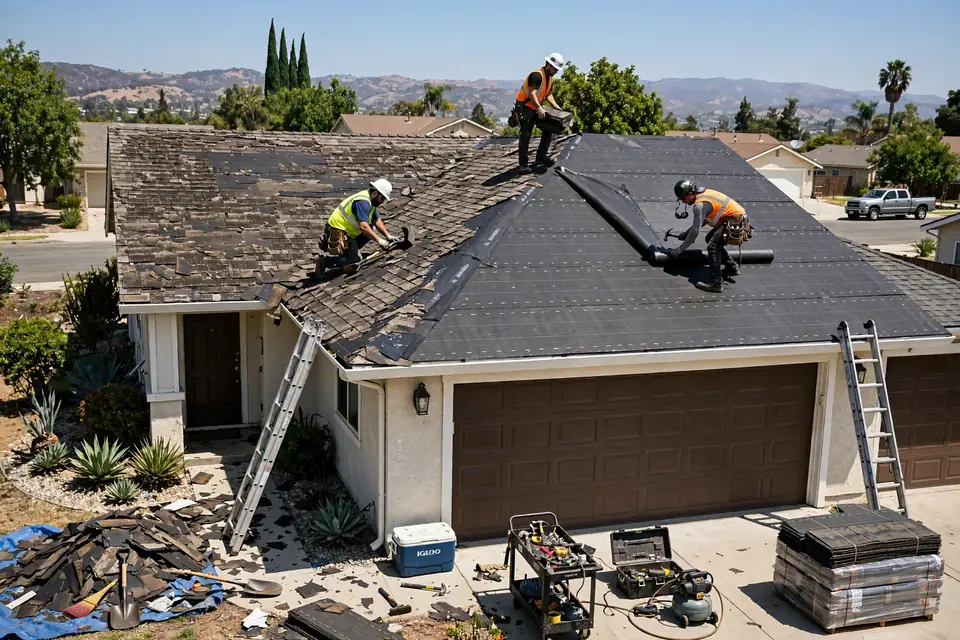
The short answer by home size
A straightforward 1,500-2,000 sq ft ranch: one to two days. A 2,500-3,500 sq ft two-story with dormers and valleys: two to three days. Large, steep, or complex roofs: three to five days. Tile and slate take longer than shingles — typically a week or more.
What can extend the timeline
Multiple tear-off layers, extensive redecking, structural repairs, custom flashing fabrication, HOA approval waits, and material lead times for specialty products. Weather is the wildcard — we never tear off more than we can make watertight the same day.
A typical two-day project, hour by hour
Day one: crew arrives early, protects landscaping, tears off old roofing, inspects and repairs decking, installs underlayment and dries in the roof. Day two: flashing, shingles or primary material, ridge caps, ventilation, cleanup, magnetic nail sweep, and final walkthrough with you.
How to keep your project on schedule
Clear driveway and side-yard access before crew arrival, keep pets and kids away from the work zone, and decide on material and color before the start date. Indecision on day one is the most common avoidable delay.
Need roof replacement in San Bruno? Call (888) 974-0663 today.
Call NowEmergency Quick CallRelated Services
Areas We Serve
Belle Air
Roof replacement in Belle Air, San Bruno.
Downtown San Bruno
Roof replacement in Downtown San Bruno, San Bruno.
More Guides
How Much Does Roof Replacement Cost in San Bruno?
Guide from Roof Replacement Co.
7 Signs Your San Bruno Home Needs a Roof Replacement
Guide from Roof Replacement Co.
Frequently Asked Questions
Do I need to leave my home during the replacement?
No. Most homeowners stay. It is loud during tear-off — plan accordingly if you work from home — but the house remains fully livable.
What happens if it rains mid-project?
We watch forecasts obsessively and keep tarps and emergency dry-in materials on site. A roof under active replacement is dried in every evening, so overnight rain is a non-issue.
What Each Day Looks Like
Day one is tear-off: the crew strips the old roofing slope by slope, the deck gets inspected and repaired, and underlayment goes on the completed sections before the crew leaves — no roof sleeps exposed. Day two is installation: flashing, starter, field shingles, ridge caps, vents. A straightforward San Bruno ranch finishes here, with the magnetic sweep and walkthrough the same afternoon.
Day three appears when the job has complications: significant redecking, steep-slope staging, complex valleys, or tile and metal systems that simply take longer. Weather can add a day — not light fog, which roofers work through, but genuine rain, which stops tear-off. Your proposal's schedule names the expected days and the weather plan; the crew lead confirms the sequence each morning.
What Slows a Job Down (and What Doesn’t)
Decking surprises are the number-one schedule variable: a roof quoted for ten sheets of plywood that needs forty adds most of a day. That is why honest estimates carry a per-sheet redecking price — the schedule flexes without the price becoming a fight. Steep pitches, limited access, and tile salvage sorting each add hours that a good estimator already counted.
What does not slow the job: morning fog (burns off, and underlayment goes on dry deck), your presence (watch all you like from the ground), or the permit inspection (scheduled in the workflow). What you can do to help: clear the driveway, move patio furniture away from the eaves, and keep pets indoors. The crew handles the rest.